Making the mine itself safe and fair.
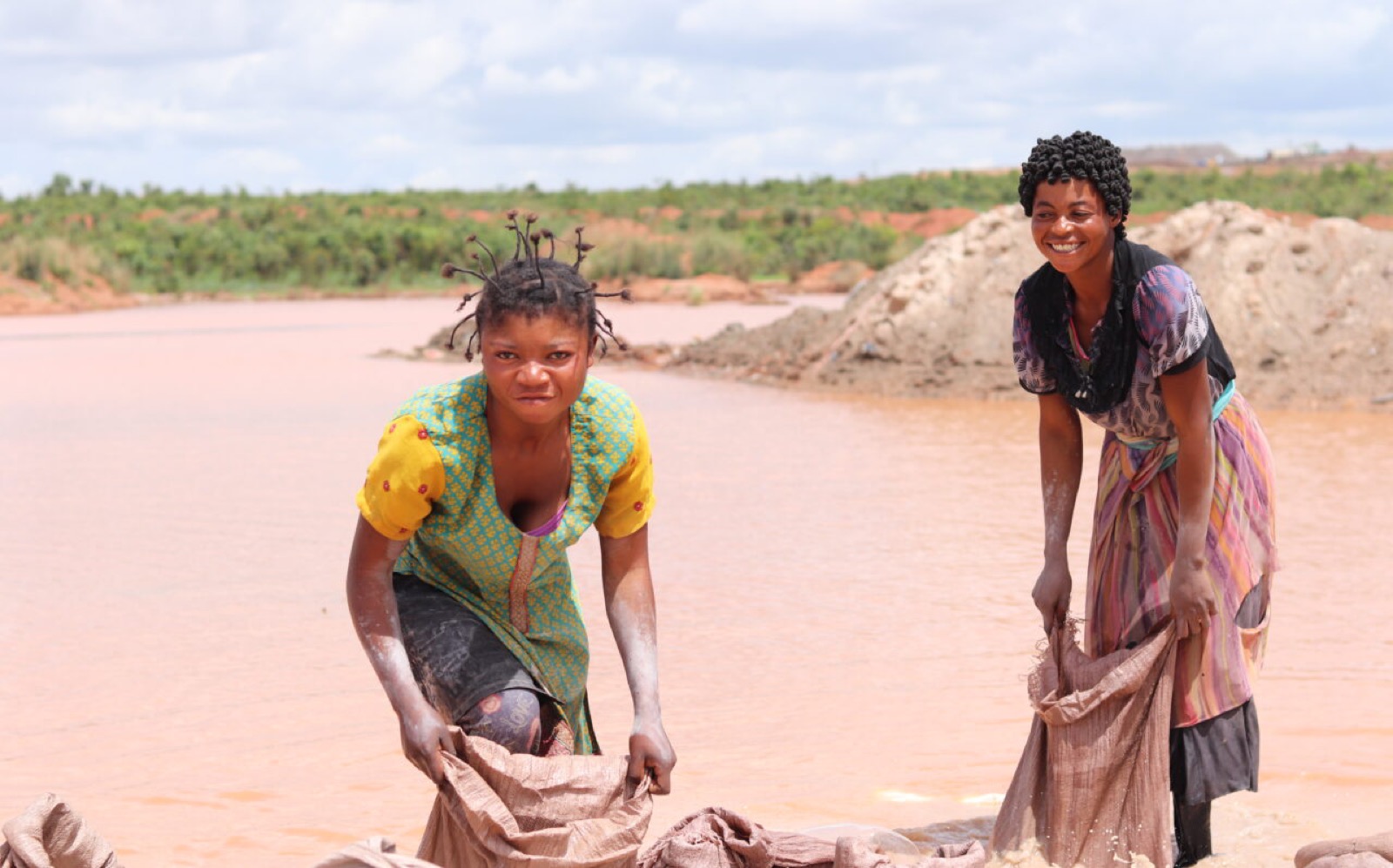
Most artisanal cobalt is dug with hand tools, in pits without support, scales or safety equipment. This pillar covers the mine site itself: access control, independent scales, protective equipment, safe pit depths, sanitation and first aid, and traceability.
Why the mine comes first.
At a typical artisanal site, miners descend hand-dug tunnels that can reach far below the legal depth limit, without shoring, ventilation or protective equipment. Cobalt is weighed and priced by the buyer, on the buyer's scale. Accidents are common and rarely documented.
The FCA works at the mine to change this, alongside the state artisanal-mining service SAEMAPE and the cooperative that runs the site, turning an informal pit into a managed, safer workplace.
The Alliance's model is a fourteen-point vision of a modern mine site: access control and identification, independent scales and cobalt-purity measurement, sanitation and first aid, protective equipment, earth-moving to keep pits within safe depths, and chain-of-custody traceability.
The building blocks of a safer site.
The elements below are what the programme puts in place at the mine.
Access & identity
Perimeter security, controlled access and personal ID systems, so who is on site, and who is not, is known.
Independent scales
Independent weighing and cobalt-purity measurement, so miners are paid fairly for what they actually produce.
Protective equipment
Hard hats, boots, gloves and safety ropes, plus toolbox training run by trained safety captains.
Safe pit depths
Earth-moving equipment to keep pits within safe, legal depths instead of unsupported deep tunnels.
Sanitation & first aid
Clean water, sanitation, on-site first-aid clinics and prevention work against cholera and tunnel risks.
Traceability
Chain-of-custody documentation from the pit, used for responsible-sourcing due diligence.
What changed on the ground, as the Alliance reports it.
More initiatives, mapped and tracked.
The Fair Cobalt Alliance is one of dozens of programmes in the artisanal cobalt space. Browse the full register, or tell us what is missing.