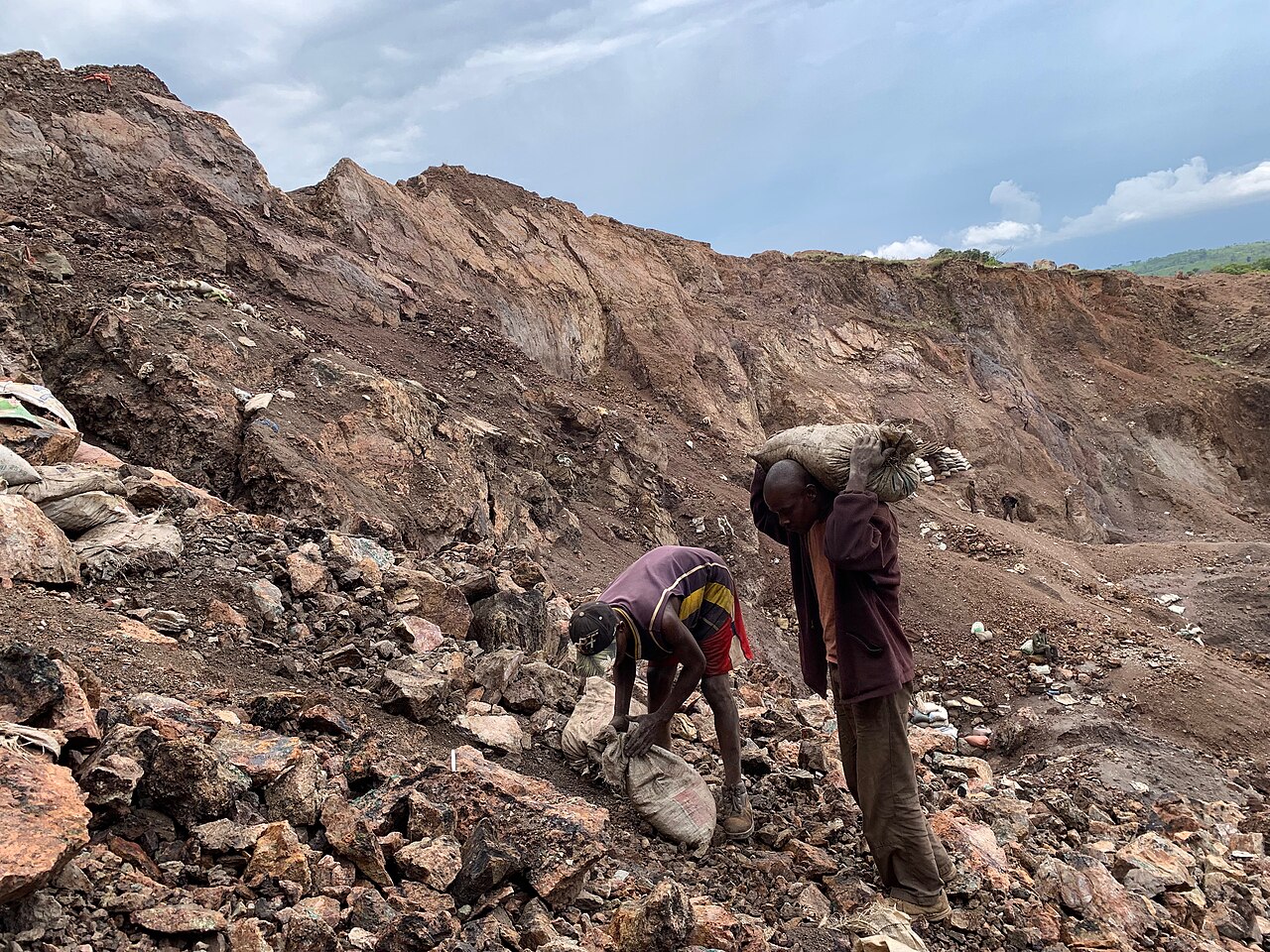
The energytransitionbegins here.
Explore the places, people and commercial connections behind cobalt in the Democratic Republic of the Congo.
The open reference on artisanal cobalt.
Most of what is written about ASM cobalt is scattered across many places, often paywalled, and hard to see as a whole. The Cobalt Hub gathers it in one place: who the actors are, what is happening, what the evidence says, and what is being done about it.
New to cobalt? Start with the basicsTrace cobalt from the mining site
Sector map
Follow the documented connections between mine sites, the companies along the supply chain, cooperatives, NGOs, initiatives and public bodies.
ExploreMining sites
Find cobalt mines and artisanal sites, then follow their operators, buyers and supporting initiatives.
ExploreCobalt dataset
Download the sites, actors, relationships and sources behind the sector map.
Explore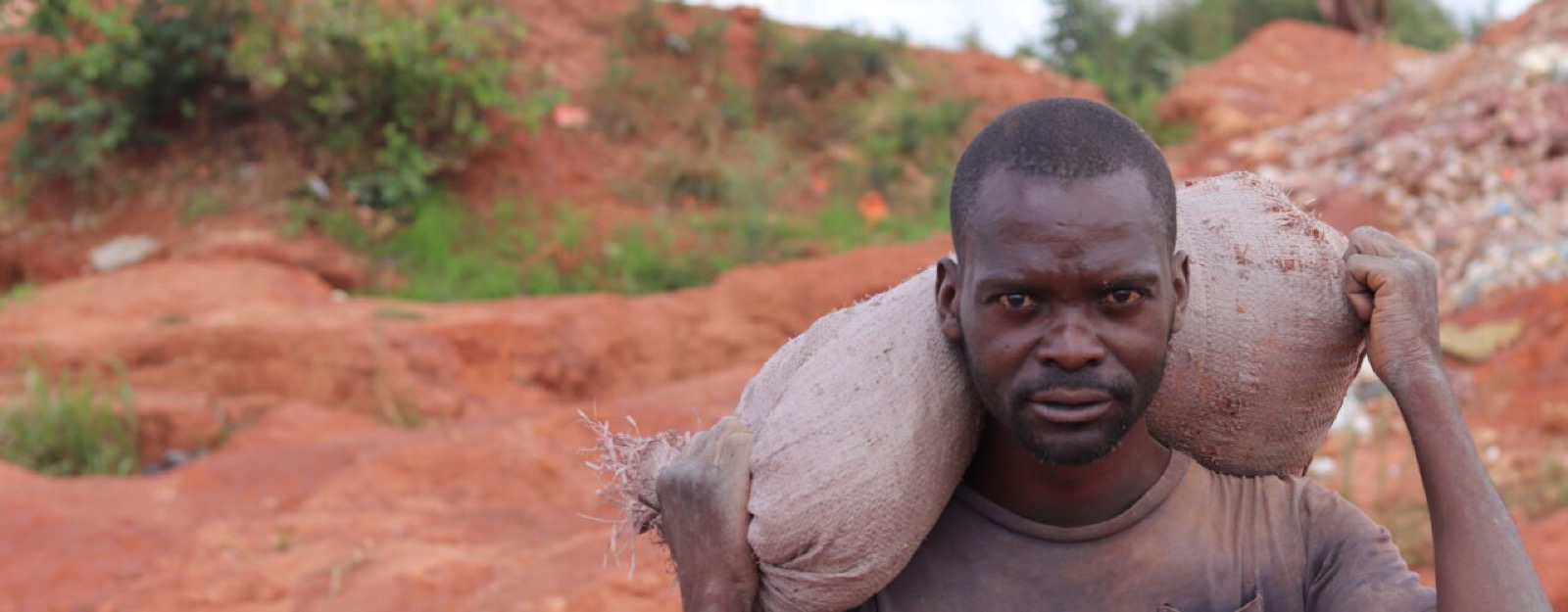
The people who mine cobalt by hand.
Why this hub exists.
Solid information on artisanal cobalt exists, but it is scattered: spread across reports, datasets, news, standards and project pages, in several languages, often behind paywalls or buried in passing mentions. Simply finding what already exists, and seeing how the pieces fit together, takes real work.
The Cobalt Hub brings it together in one place: a browsable registry of the actors, a database of initiatives, a library of the evidence, a map of the regulation, and a dated feed of developments. Every figure is sourced and dated, and every claim links back to where it came from.
It is built as a shared, open starting point for everyone working on artisanal cobalt, and it points outward to the people and organisations doing the work.
What you’ll find here.
Initiatives registry
The programmes and pilots working on safety, child labour, traceability and livelihoods, with their status.
See initiativesStakeholder registry
A browsable directory of the state bodies, companies, cooperatives, NGOs, standards and funders shaping ASM cobalt.
Browse stakeholdersUpdates feed
A dated, source-rated feed of the developments reshaping artisanal cobalt and DRC mineral governance.
Read the feedLibrary
The key reports, investigations, academic studies and standards on ASM cobalt, grouped and linked.
Open the libraryThe Numbers
Every published figure on ASM cobalt, shown as a spread of contested readings rather than a single 'true' number.
See the numbersRegulation
The DRC laws, export-quota regime and international rules that reach artisanal cobalt, and the well-known ones that do not apply to it.
Map the rulesEvery figure here is sourced; counts and shares vary by year and method. Hover any number for its source.
APLC and NRGI present a copper-cobalt corruption diagnostic
At a 10 September Kinshasa workshop, the anti-corruption agency APLC and NRGI presented a diagnostic covering mining licences, state mining companies, and environmental and social governance. Mines.cd reports that the final text is to be released publicly by the participating bodies; its findings are not yet treated here as a published report.
EGC becomes the DRC’s fifth-largest cobalt-hydroxide exporter in H1 2026
Fastmarkets reports that EGC exported 3,531 t of contained cobalt in 9,948 t of hydroxide in H1 2026, citing DRC data it reviewed. An EGC adviser separately says it handled about 2,820 t of traceable artisanal cobalt in the half-year. These are different measures and are not added together.
Congolese review highlights conflicting 2025 cobalt production totals
Mines.cd compares the CTCPM’s 100,015 t 2025 administrative tally with higher provisional and international estimates. The divergence remains unresolved; the hub shows each source’s reading separately.
DRC bans copper and cobalt concentrate exports, mandating local transformation
A joint ministerial ordinance signed 29 June 2026 by the Mines, Foreign Trade and National Economy ministers immediately prohibits raw exports of copper and cobalt concentrates, requiring local transformation before export. The ordinance allows derogations of up to one year for strategic projects and a three-month transition for a new by-product tax regime; Kamoa-Kakula reportedly retains some concentrate-export authorisation. Q1-2026 exports cited alongside the measure: about 697,000 t copper cathodes, 54,000 t copper concentrates and 52,000 t cobalt hydroxides. Reported by a single sector-press source (mines.cd).
Help keep the picture complete.
Spotted something missing or out of date? This is an open, evolving reference. Tell us, or point us to a source we should add.